Shingle Roof Replacement in Fountain Valley from $7. The original covering on most of this city, torn off rather than layered over. Free inspection and a written quote.
This is the most straightforward shingle work covered on the site. Plywood decks, simple pitches and few penetrations mean the price tracks area closely and there are fewer places for a quote to hide an assumption. If two Fountain Valley quotes differ by thousands, one of them has something in it the other does not.
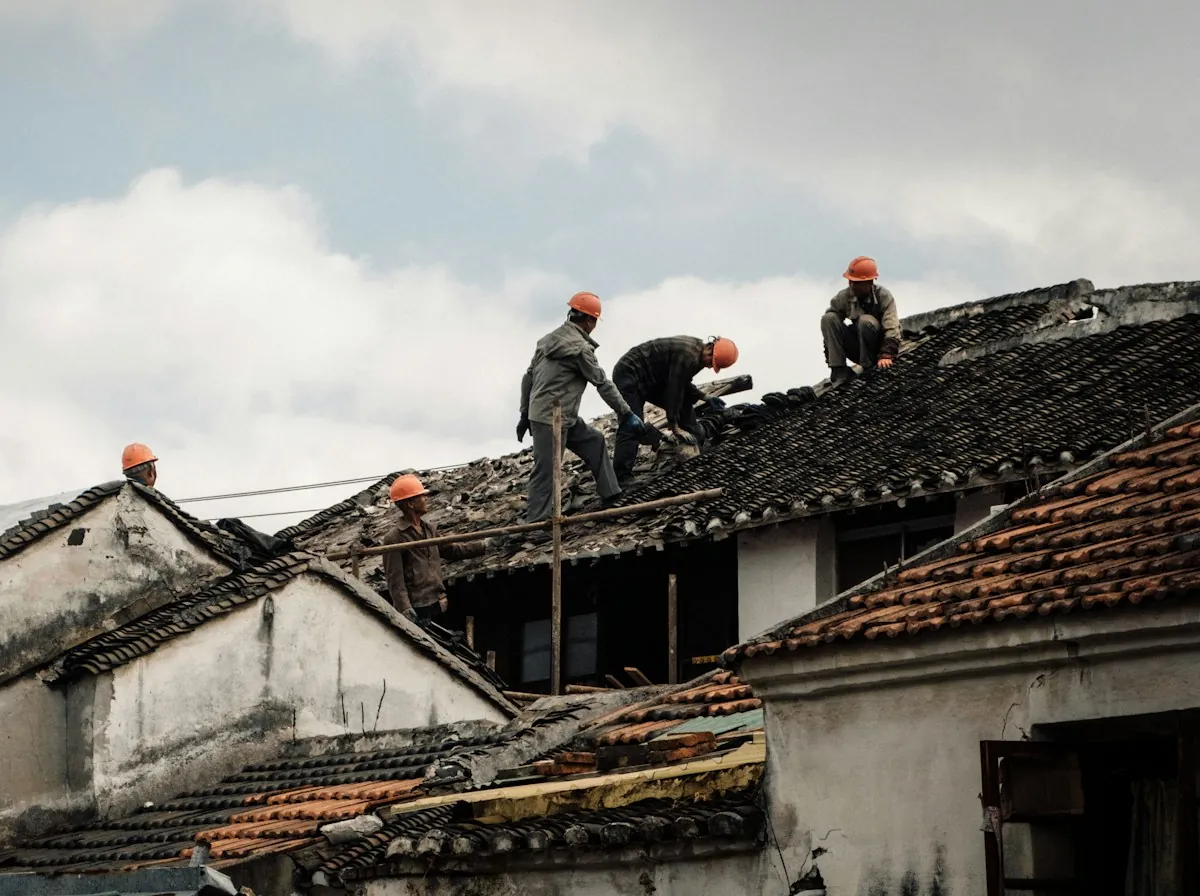
Composition shingle is what the 1960s tracts were built with and it is still the most common covering here. Sixty years on, that means most Westminster roofs are on their second or third covering -- and the layer count is the first thing worth establishing, because it decides whether an overlay is even legal.


Composition shingle runs about $7 to $11.50 per square foot here. National figures put it nearer $4, which is why an online estimate and a local quote look like they are describing different work. They usually are -- most often the tear-off or the sheathing allowance. The most predictable pricing covered on this site. Plywood decks, simple pitches and few penetrations mean the number genuinely tracks measured area -- so if two Fountain Valley quotes differ by thousands, one contains something the other does not.
A single-layer tear-off onto sound plywood, a simple pitch, and a covering at the standard end of the architectural range.
A second or third existing layer, board sheathing you cannot nail into reliably, a steep pitch, or coastal-grade fixings near the water.
The layer count at the rake edge. It costs nothing to look and it is the difference between an overlay quote and a tear-off quote.
Being developed a little later shows on the roofs. More Fountain Valley houses were built with plywood decking rather than board sheathing, which makes a tear-off more predictable and usually cheaper than the same job in Midway City. The roof geometry is simple, so the price tends to track area more closely here than anywhere else covered.
In most cities that advice is useless. Here it is the single most efficient thing you can do, because the house next door is genuinely the same house.
Most of Westminster went up in one decade, so the age, the framing, the original covering and the likely layer count next door are almost certainly yours. Ask what they were quoted, what they paid, and what was found once the covering came off.
Salt air finishes flashings, fixings and gutters long before the covering. A roof failing at its details with a sound field is a metalwork job, and that is a fraction of a replacement.
Then replacement is the right call and we will make it without hedging. What matters is not which answer you get but whether the evidence came with it.
Developed slightly later than Westminster and to a more planned pattern, which shows up as plywood decking rather than board sheathing on more of the housing.
The simpler roof geometry here makes tile work more predictable than in the older neighborhoods -- fewer valleys and changes of pitch means less cutting, less breakage and a tighter salvage count.
The low slope here is usually a small planned section -- a porch, a link between wings -- rather than an added-on afterthought, so the fall was designed rather than improvised.
Newer pads and newer units mean more of the original roofs are still structurally sound, which makes a coating the likely answer rather than a roof-over.
Simple roof geometry means fewer natural boundaries to stop at.
Built in one decade. Your neighbor's roof is yours.
Bolsa frontage, tract houses and mobile-home parks.
Unincorporated, and a decade older than the city.
Near the water. The metalwork fails first.
Small apartment blocks, and the logistics that follow.
Salt air and managed communities.
Small city, short queue, fewer inspection slots.
What is worth knowing before you book this.
Only if there is one existing layer, and it is usually the wrong call anyway on a roof this age. An overlay hides the deck, adds weight, and sits on a surface that is no longer flat. Check the rake edge before anyone quotes you one.
Look at the field rather than the failure. Composition tends to go across a whole slope at once -- granules gone, tabs brittle, seal lines broken -- rather than in patches. A bald section on an otherwise sound slope is a repair; a whole slope like that is a replacement.
Yes, and a lot of roofing companies do not. It is genuinely a different structure -- lighter, shallower trusses, wider spacing -- so it needs a roof-over or a coating system rather than a conventional tear-off, and it will not carry tile at all.
For a flat or low-slope roof, yes: aged SRI 75 or better, and that applies in all sixteen California climate zones with no exemption. For a pitched roof it depends on the climate zone, and we will confirm which one applies to your address rather than guessing at it.
Typically $11,000 to $26,000. Orange County sits at or above the wider Los Angeles market, so an LA average reads slightly low here and a national average reads very low. Composition is about $7 to $11.50 per square foot; tile considerably more unless a relay is possible.
Free inspection, and a written quote against a written scope. The layer count checked before an overlay is ever discussed.