Tile Roof Replacement in Little Saigon from $9,000. Tile that looks perfect from the curb over underlayment that has nothing left. That combination is most of this work. Free inspection and a written quote.
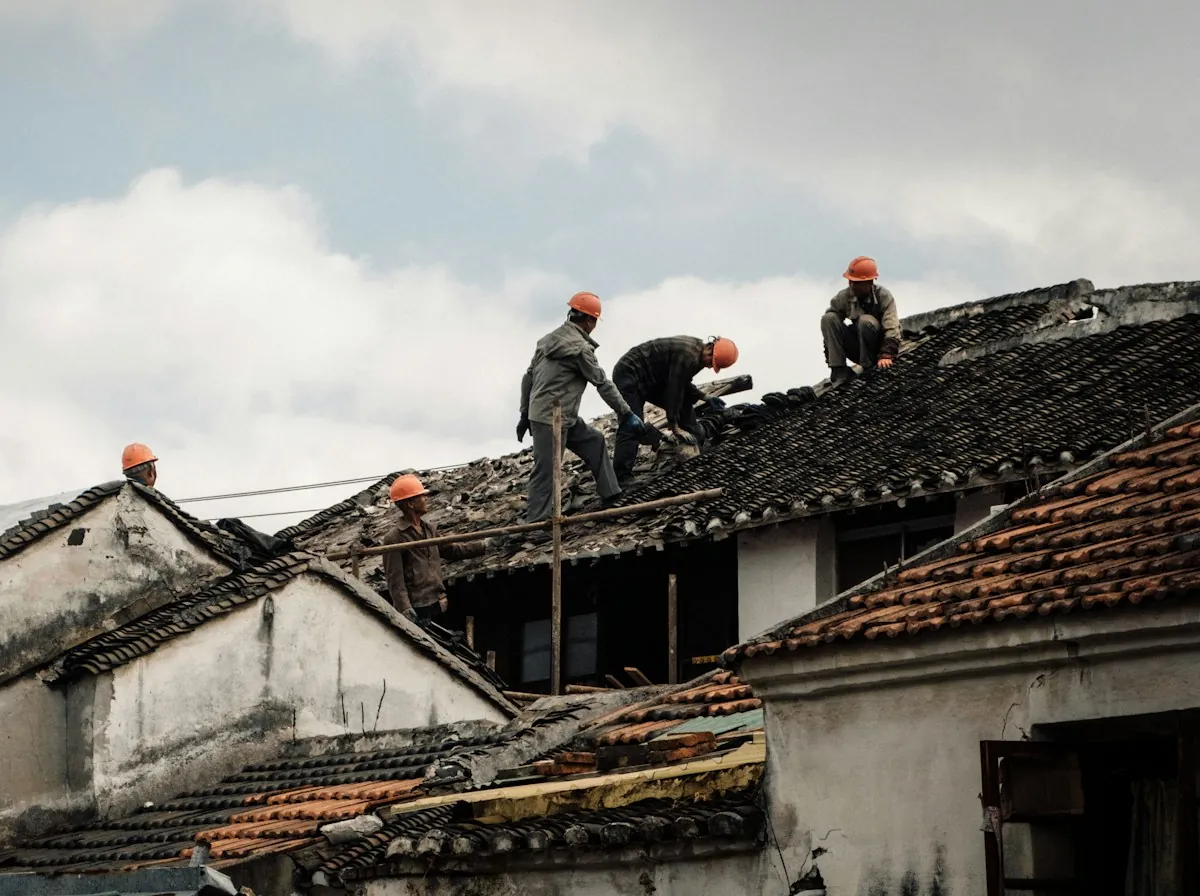
Where tile appears on the residential blocks behind Bolsa it is the same later re-cover as the rest of the city, and the same framing question applies. On the commercial frontage tile is usually decorative -- a mansard or a parapet detail over a flat roof -- which is a different job again and is often repairable rather than replaceable.
Concrete tile outlives the underlayment beneath it by decades. A tile field that looks perfectly sound from the street can be sitting on felt that has gone brittle and torn, which is why these roofs leak with no broken tile anywhere near the stain.


A lift and relay -- your own tile back down over new underlayment -- runs $9,000 to $23,000 against $31,000 to $62,000 for a full tile replacement. The tile is the expensive part and you already own it, so the only question that matters is how much of yours is still good. Two rate cards apply in this district. Commercial low slope along Bolsa prices off the plant and the trading hours; the tract houses and mobile-home parks behind it price like the rest of the city. A quote should say which it surveyed.
If the tile is sound and only the felt beneath has failed, the relay is the right job at roughly a third of the cost. We count the salvageable tile before quoting either.
Tile here is nearly always a later re-cover on framing built for shingle. The structure should be checked for the weight from inside the attic before anyone quotes putting tile back.
An allowance for breakage, stated as a number. Without it, a relay quote can become a replacement invoice halfway through, and nobody can argue about what was agreed.
Two different jobs share one ZIP code here. The Bolsa frontage is commercial low slope with roof-mounted plant and trading hours to work around -- the membrane is the smaller half of that cost. Behind it are the tract houses and the mobile-home parks, where the constraint is access and, in a park, the park's own rules.
Little Saigon runs mostly along Bolsa Avenue between Magnolia and Brookhurst, so a roof there is as likely to be commercial low slope as a pitched residential roof.
In most cities that advice is useless. Here it is the single most efficient thing you can do, because the house next door is genuinely the same house.
A tile roof quoted at $31,000 to $62,000 is very often a $9,000 to $23,000 lift and relay, because the tile is fine and only the felt beneath it has failed. Somebody has to count yours first.
Salt air finishes flashings, fixings and gutters long before the covering. A roof failing at its details with a sound field is a metalwork job, and that is a fraction of a replacement.
Then replacement is the right call and we will make it without hedging. What matters is not which answer you get but whether the evidence came with it.
Two completely different jobs share this district.
On the residential blocks the shingle story is the city's.
The Bolsa frontage is where the real low-slope work is, and it is commercial: roof-mounted plant, curbs, extract ducting from kitchens, and every one of those a detail that has to be re-flashed.
The mobile-home parks around this district are where most of this work is, and the park matters as much as the roof.
On a commercial building, partial usually means working in sections around plant that cannot be shut down, or around a business that cannot close.
Built in one decade. Your neighbor's roof is yours.
Unincorporated, and a decade older than the city.
Near the water. The metalwork fails first.
Small apartment blocks, and the logistics that follow.
Later, simpler, plywood decks. The predictable one.
Salt air and managed communities.
Small city, short queue, fewer inspection slots.
What is worth knowing before you book this.
Because the leak is under it. Concrete tile outlasts the felt beneath it by decades, so the underlayment tears and goes brittle while the tile field above still looks new from the street. That is the commonest tile failure and it is not visible from the ground.
Only if the framing takes it, and that has to be checked from inside the attic rather than assumed. Tile in Westminster is nearly always a later re-cover on structure built for a much lighter covering, so this is a real question here rather than a formality.
Here, yes, and it is genuinely useful information. Most of Westminster was built in the 1960s, so a whole street reaches the end of its roof life within a few years of itself. If your neighbors are replacing theirs, that is the most reliable signal you will get that yours is close.
Look at the rake edge -- the cut end of the roof at the gable. You can count the layers from the ground with binoculars. Two existing layers means no more are allowed, which turns an overlay quote into a tear-off quote. It is a thirty-second check and it moves the price by thousands.
Probably not, and this is common near the water. Salt air corrodes flashings, fixings, vents and gutters long before it touches the covering, so a roof can have years of field life left and a finished set of details. That is a metalwork job at a fraction of a replacement.
Free inspection, and a written quote against a written scope. The layer count checked before an overlay is ever discussed.